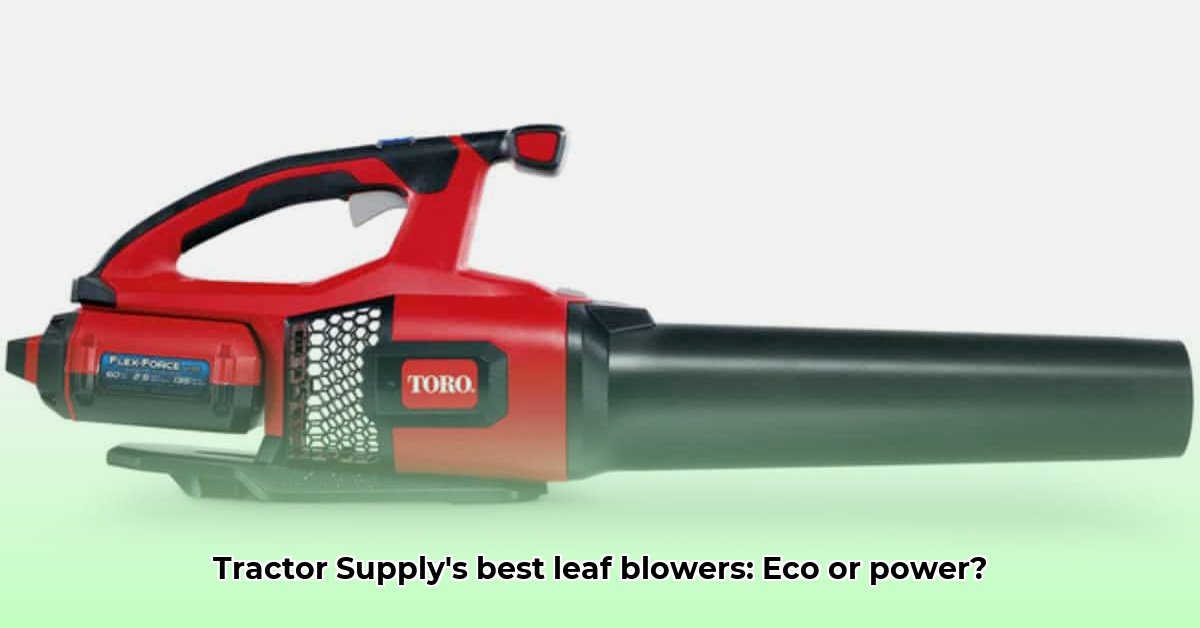
Choosing the right leaf blower involves navigating a complex landscape of power, efficiency, and environmental responsibility. This guide helps you make an informed decision, comparing gas-powered blowers with their battery-powered alternatives, highlighting the advantages and disadvantages of each to find the perfect match for your needs and values. We'll explore factors like noise pollution, emissions, cost, and maintenance to equip you to choose wisely. For more options, check out Tractor Supply leaf blowers.
Gas Leaf Blowers: Power and Its Environmental Price
Gas-powered leaf blowers, readily available at Tractor Supply, are renowned for their raw power. They're ideal for tackling large yards quickly and efficiently, especially when dealing with wet leaves or significant debris. Think of them as the workhorses of the leaf-clearing world, capable of handling even the most demanding jobs. But this power comes at a considerable environmental cost. They generate substantial noise pollution, potentially disturbing neighbors and wildlife. Moreover, they release harmful emissions into the air, contributing to air pollution and impacting air quality. A rhetorical question arises: Is the convenience of immediate, powerful clearing worth the environmental impact?
Pros:
- Superior power and speed for large areas.
- Generally lower initial purchase price.
Cons:
- High noise pollution levels.
- Significant air pollution from harmful emissions.
- Higher ongoing costs due to fuel consumption and more frequent maintenance.
Battery-Powered Blowers: A Greener Approach
Battery-powered leaf blowers represent a significant step towards environmentally conscious landscaping. These models, also available at Tractor Supply, operate significantly quieter than their gas counterparts, fostering neighborly relations and minimizing disturbance to wildlife. Crucially, they produce virtually no direct emissions, reducing your environmental footprint. This makes them a compelling option for environmentally conscious homeowners. However, battery-powered blowers typically have less power and shorter runtimes than gas-powered alternatives, especially when tackling large properties or heavy debris. The runtime consideration is a key differentiator between the gas and battery-powered options.
Pros:
- Quiet operation, reducing noise pollution.
- Low emissions for a significantly reduced environmental impact.
- Lower maintenance requirements.
Cons:
- Shorter operating times, potentially requiring recharging mid-job.
- Generally higher initial purchase price.
- May lack the sheer power of gas blowers for large or demanding tasks.
Making the Right Choice: A Detailed Comparison
Deciding on the best leaf blower requires careful consideration of several key factors. To simplify this process, the following table provides a direct comparison between gas and battery-powered options, highlighting their respective strengths and weaknesses:
| Feature | Gas Powered | Battery-Powered |
|---|---|---|
| Power | High | Moderate to High |
| Noise Level | Very High | Low |
| Environmental Impact | High (Emissions, Noise) | Low |
| Initial Cost | Lower | Higher |
| Operating Cost | Moderate to High (fuel, maintenance) | Lower (electricity, battery life) |
| Maintenance | More Frequent | Less Frequent |
| Best Suited For | Large properties, professionals | Smaller yards, environmentally conscious homeowners |
Your Step-by-Step Guide to Choosing a Leaf Blower
Assess Your Needs: Consider the size of your yard, the volume of leaf debris, and your budget. Are you a homeowner or a professional landscaper? This will greatly influence the power and capabilities you require.
Establish a Budget: Factor in both the initial purchase price and the ongoing costs of fuel, battery replacements (if applicable), and maintenance. Lifecycle costs should be a primary consideration.
Prioritize Your Values: How important is minimizing environmental impact? What is your tolerance for noise pollution? These values will significantly influence your decision.
Research Specific Models: Compare the specifications of different leaf blowers available at Tractor Supply, paying attention to CFM (cubic feet per minute), runtime, noise levels (decibels), and any additional features.
Consult Customer Reviews: Read reviews from other buyers to gain insights into real-world performance and reliability of different models. This will help you to identify potential issues and evaluate the product's long-term value.
Make Your Decision: Using all of the above information, you can make a well-informed decision aligned with your needs, budget, and environmental priorities.
The Future of Leaf Blowers: Innovation on the Horizon
The leaf blower market is constantly evolving. Technological advancements are geared towards creating both more powerful and more environmentally-friendly options. Manufacturers are striving to improve fuel efficiency in gas engines and develop longer-lasting, higher-capacity batteries. Emerging cleaner fuel alternatives, such as biofuels, hold potential for reducing emissions from gas-powered models. Continued research and development in battery technology promise even more powerful and efficient cordless leaf blowers in the future.
Key Takeaways: Balancing Power and Sustainability
- Gas blowers offer unmatched power but come with high emissions and noise pollution.
- Battery-powered blowers are quieter and cleaner but may have shorter runtimes and less power.
- Making a sustainable choice requires considering initial costs, operating expenses, maintenance, lifespan, and environmental impact.
- Rapid advancements in battery technology are constantly improving the performance of electric leaf blowers.
- The best leaf blower for you depends heavily on your individual yard size, budget, and how seriously you take your commitment to environmental responsibility.
Consumer Reports: Gas vs. Electric Leaf Blowers: Which Is Better?